
Grounding agents in user files
AshnaAI grounds answers in files the user already uploaded. Embeddings are queued in the background, linked to the chat before ingestion starts, and can be restarted if they go stale. The product retrieves from those files; it does not train a new model on them.
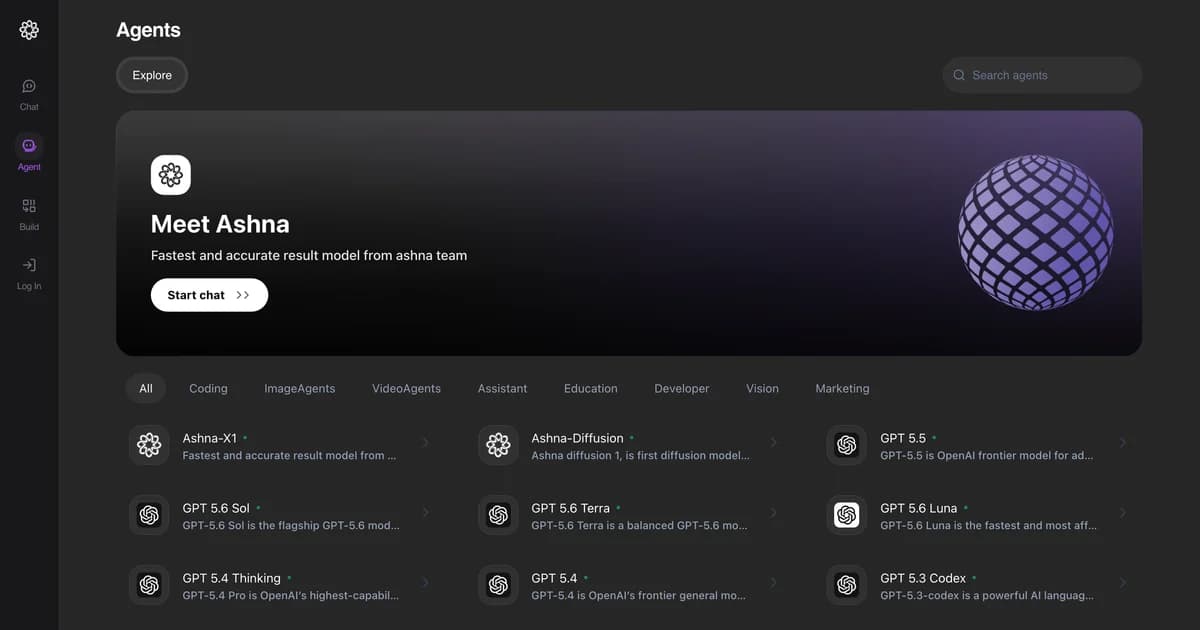
Method: Inspection of chat-file embedding enqueue, embedding-type defaults, chat-to-file linking, and stale-embedding restart behavior.
Key findings
- File embeddings are enqueued asynchronously and linked to the chat before ingestion starts, so retrieval has a stable file key even while embedding is in flight.
- The default embedding type for this path is chatWithFile. Stale embeddings can be restarted instead of leaving a silent gap.
- Grounding here is retrieval over user-owned files, not fine-tuning or training on those documents.
Link first, embed second
The enqueue service links each file key to the chat before ingestion starts. That order matters. If embedding is slow, the chat still knows which files belong to it. Status rows record embedding type and whether the job was queued.
Background work can fail. The service logs the failure instead of swallowing it, and stale embeddings can be restarted.
Grounding is retrieval
Once vectors exist, the agent retrieves from the user’s files and answers with that context. This is the same pattern the glossary calls retrieval-augmented generation.
Ashna-X1’s catalog row disables PDF file query on that model. File-grounded jobs should use the chat-with-file path or a model that allows document query. That is a catalog fact, not a slogan.
Where this connects
Presentation research can consume user context as well as the web. Desktop local files are a different bridge. The how-to for chatting with a PDF is the conversion page for this cluster.
Glossary terms for RAG, embeddings, chunking, and grounding should point at live blogs once those slugs exist.
Limitations
Embedding quality depends on parse quality. Scanned PDFs, huge archives, and files the user never attached will not be grounded. AshnaAI does not claim to index a company’s entire file server from this chat path alone.
This is not a document-management product and not a website CMS.
Frequently asked questions
- Does AshnaAI train on my PDFs?
- No. Files are parsed, embedded, and retrieved for the chats that attached them. That is grounding, not training a new foundation model.
- When can the agent use a file I just uploaded?
- The file key is linked to the chat before ingestion finishes. Embedding runs in the background. If the job goes stale, the product can restart it.
- What is chatWithFile?
- It is the default embedding type for chat-attached files. Other embedding types may exist, but this research covers the chat-file path.
- Is this the same as a vector database product?
- It uses embeddings and retrieval, which are the same ideas. The user-facing job is “chat with this file,” not operating a standalone vector store.
- Can I use local files that never leave my machine?
- Desktop local-file workflows are covered in the desktop how-to. This article is the cloud chat-file embedding path.
- Why do answers still hallucinate sometimes?
- Retrieval can miss a chunk, and the model can ignore retrieved text. The grounding checklist blog covers operational checks. This note documents the pipeline, not a zero-hallucination claim.
Related
Try this in AshnaAI. Create a free account.