
Ashna-X1 and task-aware model routing
Ashna-X1 is the default catalog model on AshnaAI, but it does not replace every provider endpoint. Task-aware routing means matching tools, context limits, and reasoning controls to the job instead of sending every request to one chat model.
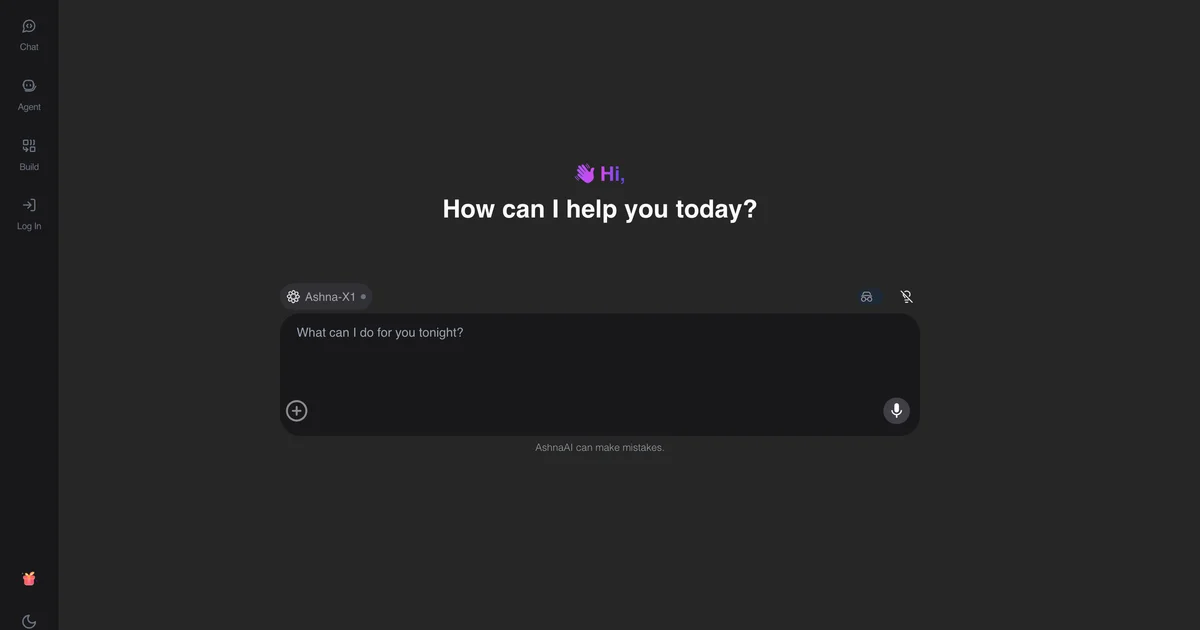
Method: Catalog inspection of the live AshnaAI foundation-model list: rank, provider, tool and file capabilities, context limits, and per-provider reasoning notices. No third-party latency benchmark is claimed.
Key findings
- Ashna-X1 is catalog rank 1 with apiIdentifier ashna-x1, tool calling, web search, and deep think enabled; PDF file query is explicitly off on that row.
- The same catalog keeps provider models such as GPT 5.5, Claude, and Gemini, each with different reasoning notices and context limits.
- Routing is a capability match: tools, context window, and whether thinking can be disabled change the right model for a task.
What the catalog actually stores
AshnaAI does not present a single hidden model behind a chat box. The foundation catalog stores rank, provider, API identifier, context limit, and capability flags for each row. Ashna-X1 is rank 1: a model trained and built by AshnaAI, pretrained and fine-tuned on top of open-weight models, using the ashna-x1 identifier.
That row is the default for users who want a fast, tool-capable answer without choosing OpenAI, Anthropic, or Google. It is not a claim that every other model is unused.
Task-aware routing versus brand picking
Picking ChatGPT or Claude by brand is a preference. Task-aware routing is a constraint match. A job that needs a 400k-class context window, disabled thinking, or PDF query is not the same job as a short tool-using chat.
The catalog encodes those constraints. GPT-family rows advertise a 400k context class. Gemini 3.1 Pro documents that thinking cannot be disabled. Anthropic rows treat extended reasoning as optional. X1 is the default when the user does not want to manage those knobs.
Named components
The live list lives in the AshnaAI model catalog. Each ModelProps row carries toolCallAllowed, webSearchAllowed, deepThinkAllowed, pdfFileQueryAllowed, and contextLimit. Chat traffic uses the row’s chatApi.
This research does not publish proprietary routing weights. It reports the public contract: X1 is the default, provider models remain selectable, and capability flags decide whether a task should leave the default.
Limitations
This note does not claim independent MMLU or latency scores for Ashna-X1 versus GPT or Claude. It also does not claim that X1 can author websites or web apps. Those jobs are out of scope for AshnaAI.
If you need a buying comparison, use the ChatGPT and Claude compare pages. If you need a how-to, use the X1 blog.
Frequently asked questions
- What is Ashna-X1?
- Ashna-X1 is the orchestration layer that helps AshnaAI plan workflows, coordinate agents, route models, use tools, and keep execution under control. It is a model trained and built by AshnaAI — pretrained and fine-tuned on top of open-weight models. It is the default catalog model and supports tool calling, web search, and deep think.
- Is Ashna-X1 the same as ChatGPT?
- No. ChatGPT is a consumer product with its own models. Ashna-X1 is a model trained and built by AshnaAI, and the orchestration layer that can route work to named catalog models when needed.
- Why would I pick a model instead of using Ashna-X1?
- Use a named model when the job needs a provider-specific capability, a required context window, or a reasoning mode that X1’s default path does not expose. The catalog documents those differences per row.
- Does Ashna-X1 call tools?
- Yes. The catalog marks tool calling, web search, and deep think as allowed. PDF file query is not allowed on the X1 row, so file-grounded jobs should use a model or workflow that supports document retrieval.
- How does AshnaAI avoid sending every task to one model?
- The product keeps a multi-provider catalog with per-model flags. Agents and users can stay on X1 for general work, or pin a model when the task needs that provider’s reasoning, context, or file behavior.
- Where should I compare AshnaAI to ChatGPT or Claude?
- Use the commercial compare pages for buying criteria. This research note explains the catalog mechanics behind those pages.
Related
- AshnaAI vs ChatGPT
- AshnaAI vs Claude
- Large Language Model (LLM)
- Foundation Model
- how to use ashna x1 instead of picking models yourself
- reduce llm api cost 95 percent
- how the dynamic model router cuts ai cost
- cheapest coding ai vs claude opus 5 and gpt 5 6 sol
- claude code restrictions microsoft uber
- cheapest multi model ai api
- no code agent spec and tool permissions
Try this in AshnaAI. Create a free account.