
What shipped on 22 September
On 22 September 2026 Microsoft added GPT-6 Luna to generally available Foundry deployments with GPT-6 Sol, in GPT-6 Astra, Sol, and Luna for production AI agents. Luna is the high-volume row. Artificial Analysis the same day said the list price is about half of GPT-5.6 Luna: $0.10 input and $0.50 output per million tokens, with the same 90% cache-read discount and 25% cache-write premium.
AshnaAI lists the catalog id `gpt-6-luna` on the same Azure Responses path as `gpt-6-astra`. The context window on that row is 1.05 million tokens. Output on the short-context sheet is $0.50 per million tokens, the same output rate as GLM-5.3-Flash and a fifth of the input rate.
Benchmarks vs GPT-5.6 Sol and Luna
Read Luna’s column as a cheaper GPT-5.6 Luna, not as a coding upgrade. Coding Agent Index moves from 43 to 41. DeepSWE v1.1 moves from 66% to 64%. SWE-Atlas-QnA moves from 49% to 44%. Terminal-Bench 4.0 in the Intelligence Index breakdown moves from 12% to 13%. Hallucination rate on AA-Omniscience falls from 93% to 77%, and accuracy stays about flat (44% versus 43%). AutomationBench-AA moves from 50% to 53%. Artificial Analysis also says Luna drops about 75 Elo on GDPval-AA v2.1 and about 45 Elo on AA-Briefcase. Intelligence Index cost per task is $0.07 versus $0.18.
The table is Artificial Analysis at max effort, dated 22 September 2026. It is an independent scoreboard, not OpenAI’s launch table. GPT-6 Astra still leads OpenAI’s own 3 September computer-use and science cells; those Astra numbers are on the GPT-6 Astra launch post.
| Benchmark | GPT-6 Sol | GPT-5.6 Sol | GPT-6 Luna | GPT-5.6 Luna | |
|---|---|---|---|---|---|
| Coding agents | Coding agents | ||||
| Coding Agent Index (Codex harness) | 57 | 55 | 41 | 43 | |
| Terminal-Bench 4.0 (Codex harness) | 43% | 37% | — | — | |
| SWE-Atlas-QnA | 58% | 54% | 44% | 49% | |
| DeepSWE v1.1 | — | — | 64% | 66% | |
| Knowledge and agents | Knowledge and agents | ||||
| AA-Omniscience Index | 27 | 22 | 1 | −10 | |
| Hallucination rate (lower is better) | 60% | 92% | 77% | 93% | |
| AutomationBench-AA | 62% | 60% | 53% | 50% | |
| Terminal-Bench 4.0 (Intelligence Index breakdown) | 44% | 40% | 13% | 12% | |
What the token bill looks like
Luna at $0.10 / $0.50 is the GPT-6 pin for volume. Sol is $2 / $10. Astra is $10 / $50. GPT-5.6 Luna on the Ashna sheet is $0.20 / $1.20. Cached input is 10% of uncached input. Cache writes are 1.25× uncached input. On Ashna, reasoning tokens for this family are billed at 1.5× the short-context output rate ($0.75 per million for Luna). GLM-5.3-Flash stays $0.15 / $0.50 if you want a non-OpenAI cheap coding pin.
| Rate per 1M tokens | GPT-6 Sol | GPT-6 Luna | GPT-6 Astra | GPT-5.6 Sol | GPT-5.6 Luna |
|---|---|---|---|---|---|
| Input | $2.00 | $0.10 | $10.00 | $4.00 | $0.20 |
| Cached input | $0.20 | $0.01 | $1.00 | $0.40 | $0.02 |
| Cache write | $2.50 | $0.125 | $12.50 | $5.00 | $0.25 |
| Output | $10.00 | $0.50 | $50.00 | $20.00 | $1.20 |
Long context is a separate Azure rate
Microsoft’s long-context column for Luna is $0.20 input, $0.02 cached input, $0.25 cache write, and $0.75 output. Ashna’s billed sheet stays on the short-context rates. A long prompt is still cheap next to Sol, and it is not the $0.10 / $0.50 short-context line at the provider.
| Rate per 1M tokens | GPT-6 Sol | GPT-6 Luna |
|---|---|---|
| Input | $4.00 | $0.20 |
| Cached input | $0.40 | $0.02 |
| Cache write | $5.00 | $0.25 |
| Output | $15.00 | $0.75 |
When to pin Luna instead of Sol or Flash
Pin Luna when the task is repetitive, the output is short, and a miss is cheap to rerun. Pin GPT-6 Sol when the Coding Agent Index gap or the GDPval regression shows up in the file you needed. Pin GPT-6 Astra for computer use and the science cells Astra published. Keep GLM-5.3-Flash as the other volume coding default so one lab does not own the cheap tier.
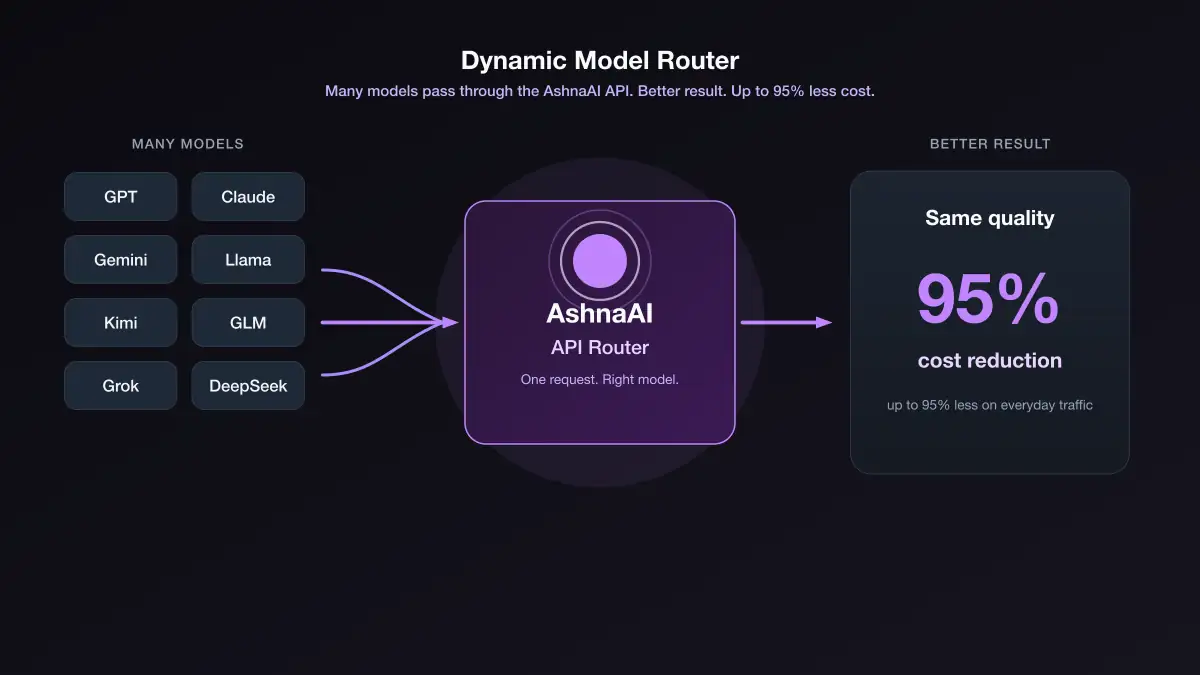
Mixed everyday work can stay on Ashna-X1. Cost ladder: Cheapest coding AI vs Claude Opus 5 and GPT-5.6 Sol.
Try gpt-6-luna now
New accounts start at app.ashna.ai/signup. Open GPT-6 Luna in AshnaAI chat. Run the same prompt on GPT-6 Sol and GLM-5.3-Flash before you leave a production job on the cheapest id.
Product API traffic uses Account → API and the AshnaAI API docs. The model id is `gpt-6-luna`.
Sourced to Microsoft’s Foundry post for GPT-6 Astra, Sol, and Luna, and to Artificial Analysis on 22 September 2026. Benchmark cells are copied from that Artificial Analysis article, including the coding regression. Prices are Azure Global Standard short context, the sheet Ashna bills. Does not invent scores OpenAI did not publish on these pages.
Topics
Related
- AshnaAI for Work
- AshnaAI vs ChatGPT
- AshnaAI vs Claude
- Large Language Model (LLM)
- Foundation Model
- gpt 6 sol launch benchmarks
- gpt 6 astra launch benchmarks
- deepseek v4 1 flash launch benchmarks
- glm 5 3 flash vs gpt 5 6 sol
- pin glm 5 3 flash for coding
- how to call any catalog model through the api
- cheapest coding ai vs claude opus 5 and gpt 5 6 sol
- how to use ashna x1 instead of picking models yourself
- ashna x1 task aware model routing
Try this in AshnaAI. Create a free account.
Found this article insightful?
Share it with fellow builders, founders, and AI practitioners.